
Josephus preprint reassesses disputed reference to Jesus's resurrection
A preprint argues that a disputed passage in the historian Flavius Josephus's work may preserve reports that Jesus's followers saw him alive after his crucifixion. Independent researcher Jesús Fernández-Pedrera Correa proposes that later Christian transmission strengthened the wording into a direct affirmation of resurrection.
- A researcher proposes that Josephus originally recorded followers' reports of seeing Jesus alive after his crucifixion.
- The preprint compares Greek, Latin, Arabic and Syriac versions preserved through later transmission.
- No manuscript from Josephus's lifetime is examined, and the proposed original wording remains uncertain.
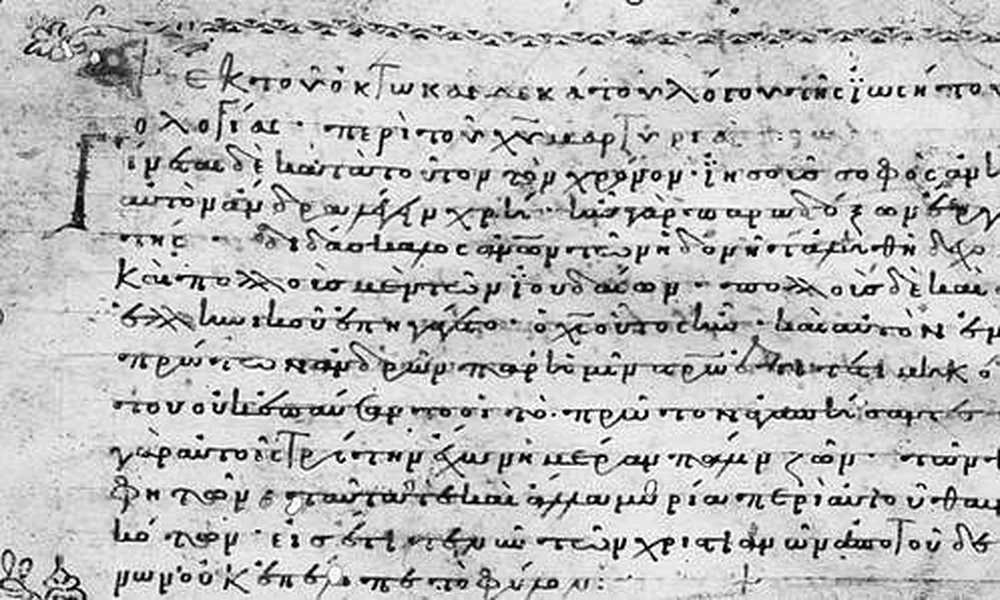
The analysis concerns the Testimonium Flavianum, a passage about Jesus in Jewish Antiquities, written around 93 to 94 CE. According to a report published on 29 October and updated on 30 October, Fernández-Pedrera Correa compared Greek, Latin, Arabic and Syriac versions. The Latin account dates to the late fourth century, while the Arabic and Syriac accounts come from the tenth and twelfth centuries respectively. These are later copies, quotations and retellings, rather than a surviving manuscript from Josephus's lifetime.
The Arabic version presents Jesus's appearance after death as something his disciples reported. Fernández-Pedrera Correa argues that this could reflect an earlier formulation in which Josephus described their claims without endorsing them. The surviving Greek version, by contrast, states that Jesus appeared alive on the third day and connects this with fulfilled prophecy. The researcher regards the prophetic language as particularly suggestive of Christian expansion, but considers his reconstruction plausible rather than established.
The study also revisits the declaration that Jesus was the Christ. Other versions qualify this by describing him as believed or thought to be the Messiah, while the Arabic uses a more tentative formulation. The researcher also cites the early Christian writer Origen's statement that Josephus did not accept Jesus as the Messiah. He regards these differences as stronger evidence of alteration than the omission, in Arabic, of another phrase implying that Jesus was more than human.
Fernández-Pedrera Correa considers the closing reference to Jesus's followers still existing in Josephus's day more consistent with the historian's style and interests. Nevertheless, the surviving versions cannot establish precisely how much of the resurrection reference Josephus wrote. The proposed reconstruction concerns the transmission of claims attributed to Jesus's followers; it does not independently establish the events they described. The supplied report identifies the study as a preprint and provides no independent scholarly assessment.