
Pompeii cupboard yields childhood charms and coins
The remains of a wooden cupboard in Pompeii have yielded childhood charms, a perfume bottle, household vessels and coins, offering a picture of daily life before the eruption of Mount Vesuvius in 79 CE.
- A reconstructed cupboard contained a necklace of at least 24 charms and a woven container holding 38 bronze coins.
- The charms include images of Bes and Mercury, alongside miniature hands, feet and plant forms.
- Lead weights suggest possible trading activity, but the identity of the house's resident remains uncertain.
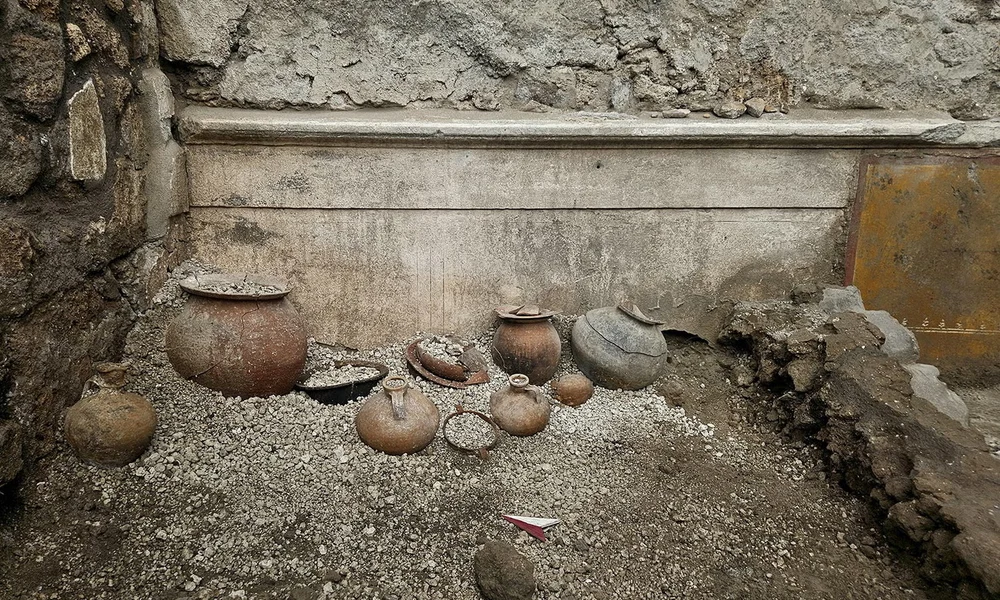
Archaeologists reconstructed the cupboard from fragments and traces inside a house on Via dell'Abbondanza, one of the Roman city's busiest streets. Among its contents was a necklace comprising at least 24 small charms made from bone, glass paste, earthenware and rock crystal. These included representations of the gods Bes and Mercury, miniature hands and feet, pine cones and bunches of grapes. The collection brings together personal ornaments and objects associated with childhood protection.
Objects of this kind, known as crepundia, were traditionally given to Roman children as protective amulets and rattles. Their sounds could help adults keep track of a child. Some people retained them into adulthood as reminders of childhood, so the necklace does not establish that its owner was still a child when Pompeii was destroyed. Site director Gabriel Zuchtriegel told Reuters that the identity of the house's inhabitant could not be reconstructed with certainty.
The cupboard also held tweezers, a small glass bottle for perfume or ointment, an incense burner, and bronze, glass and ceramic vessels, including cooking pots. A wooden box contained lead weights, suggesting that someone in the household may have been involved in trade. A small woven container held 38 bronze coins. The presence of money alongside objects with possible sentimental value suggests that the occupants did not retrieve these possessions during the eruption, although the finds alone cannot establish their fate.
You Might Also Like
The house stands in central Pompeii, near Naples, and has been tentatively linked to a man named Cornelius Maximus through inscriptions found there. Its facade was excavated in 1912, but rooms behind it have been investigated as part of a wider restoration project. Vesuvius buried the city beneath metres of volcanic material, preserving buildings, objects and graffiti.