
London Museum reopens in restored Smithfield market
London Museum will open its new home at Smithfield’s restored Victorian General Market on Saturday 28 November. The £437 million redevelopment brings together thousands of years of the capital’s history while returning the disused market building to public use after more than thirty years.
- London Museum opens its new permanent galleries at Smithfield’s Victorian General Market on 28 November.
- The £437 million redevelopment brings the disused building back into public use after more than three decades.
- Displays range from Roman writing tablets and historic jewellery to Banksy’s artwork and a smashed punk bass guitar.
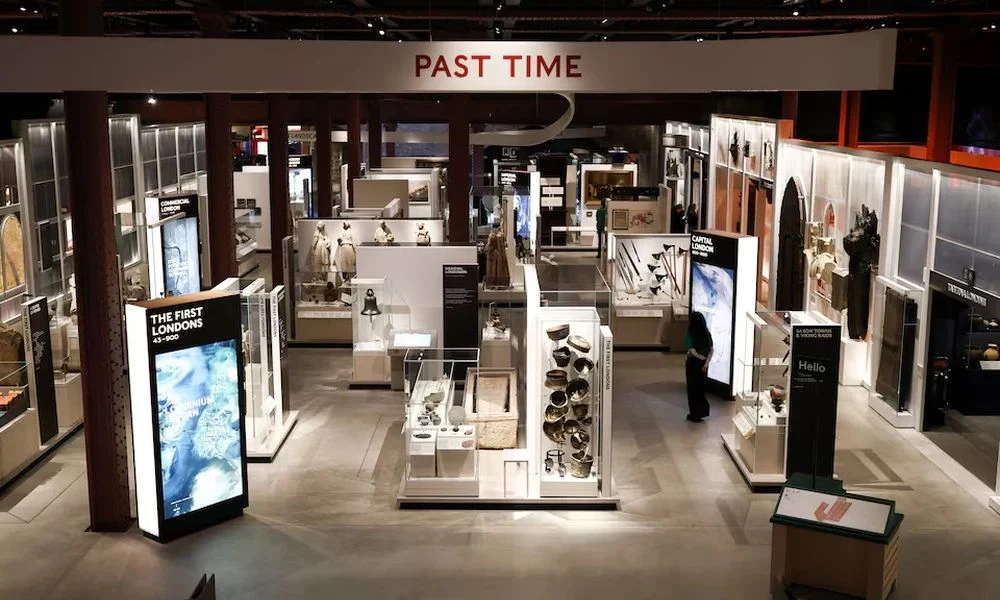
The opening follows a decade-long transformation and the closure of the museum’s former London Wall site near the Barbican in 2022. Drawing on a collection of seven million objects, the new museum combines historical galleries with spaces for contemporary London life. Its free permanent displays occupy the General Market, while the neighbouring Poultry Market is scheduled to open in 2028 with temporary exhibition galleries, a learning centre and collection storage.
Roman writing tablets offer some of the most direct encounters with the city’s early inhabitants. Part of the Bloomberg Collection, they preserve everyday communications and include London’s earliest surviving written reference. A further exhibition, Londinium: the making of a Roman city, will open in spring 2027 in rediscovered underground vaults. These spaces form part of the restored building’s own history, adding another layer to a museum concerned with how London has repeatedly changed and rebuilt itself.
Other galleries bring together objects associated with wealth, power and personal experience. The Cheapside Hoard, an exceptional collection of Elizabethan and Jacobean jewellery, will receive its fullest display yet. A vest traditionally believed to have been worn by Charles I at his execution in 1649 will be exhibited for six months. More recent cultural history appears through Banksy’s Piranhas, painted on a police sentry box, and the Fender Precision bass that The Clash’s Paul Simonon smashed on stage in 1979.
You Might Also Like

The setting is itself an important part of the story. Smithfield was already a livestock market by the twelfth century, and its later buildings reflect the infrastructure needed to supply a growing metropolis. Restoring the General Market has involved cleaning brickwork, reinforcing roofs and excavating its vaults. A viewing window beside the underground galleries will allow visitors to watch passing Thameslink trains, connecting the historical displays with the working city outside. The museum’s new home thus preserves a former commercial landmark while giving it a different public purpose.