
Students uncover Roman gold on their first dig
First-year archaeology students have uncovered Roman gold jewellery, military fittings and inscribed objects during their first excavation in Northumberland. The discoveries at a site in Redesdale offer fresh insights into life on Rome’s northern frontier, with their quality and quantity surprising experienced researchers.
- Newcastle University students recovered gold jewellery, military equipment and inscribed objects during a training excavation in Northumberland.
- A seven-centimetre gold chain fragment emerged on the first day, followed by a gilded cavalry fitting.
- A carved gemstone and pottery ownership marks offer glimpses of individuals who lived or worked on Rome’s frontier.
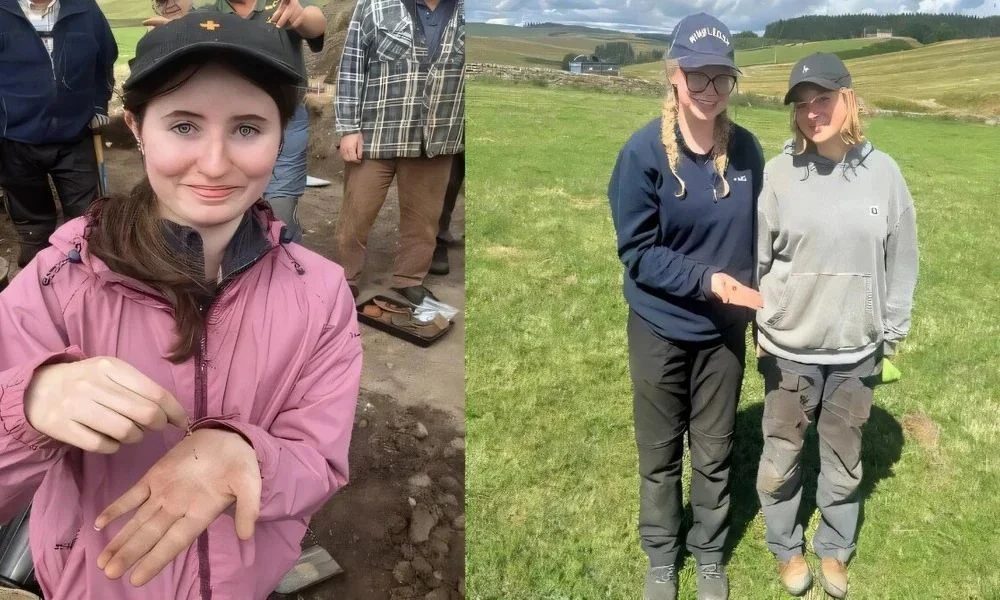
According to Newcastle University’s announcement on 18 November, 52 students participated in the summer 2026 excavation, working in two groups that each spent a fortnight on site. They joined volunteers from the Redesdale Archaeology Group under the direction of The Archaeological Practice Ltd. Elise Zallu found one of the season’s outstanding objects on the opening day: a gold chain fragment approximately seven centimetres long. Its interwoven links were made using the sophisticated Roman loop-in-loop technique, producing a flexible chain from carefully shaped rings.
Chains of this kind are associated with elite jewellery and prestigious military accessories, although the fragment’s original owner remains unknown. Other discoveries raised questions about everyday activities. Shannon Wood recovered a folded lead sheet bearing partially obscured Latin lettering. Researchers consider a commercial seal the most likely interpretation, potentially connecting it with ownership, taxation or military supplies. A personal message or curse tablet remains another possibility. Megan Potter also discovered a crescent-shaped bronze military fitting with surviving gilding, which may once have decorated a belt, horse harness or sword scabbard.
Pottery provided more personal traces. A scratched inscription on a Samian ware bowl appears to refer to someone named Martinus, with similar lettering occurring on other fragments. These may represent ownership marks left by an individual who lived or worked at the site. During the final week, Maisy Watmough and Zoe Yuill jointly uncovered a carnelian intaglio depicting Jupiter. Such engraved stones were used in signet rings to impress identifying images into wax. Their discovery was a single gemstone, rather than separate finds by each student.
You Might Also Like
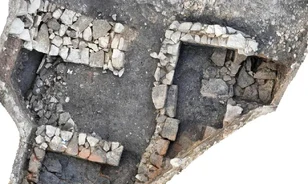
The objects belong to a wider investigation of the buildings, industries and supply systems supporting frontier life. Since 2021, the current project has examined two large enclosed areas, including roads, defences, buildings and evidence of industrial activity. Site director Richard Carlton explained that artefacts gain significance when considered alongside these structures. Together, they help researchers examine how soldiers, traders and civilian communities interacted, placing individual possessions within the working landscape that sustained Rome’s northern frontier.