
Ancient tree rings help date Babylon’s fall
Ancient timber from archaeological sites in Turkey has helped researchers narrow down when the Old Babylonian kingdom fell. A study combining tree-ring radiocarbon measurements, archaeological evidence and ice-core records strongly supports a chronology placing the Hittite sack of Babylon around 1587 BCE.
- A new study supports a chronology placing the Hittite sack of Babylon around 1587 BCE.
- Researchers used radiocarbon measurements from individual tree rings to date ancient Anatolian timbers.
- Archaeological connections and ice-core evidence helped assess competing timelines for Mesopotamian history.
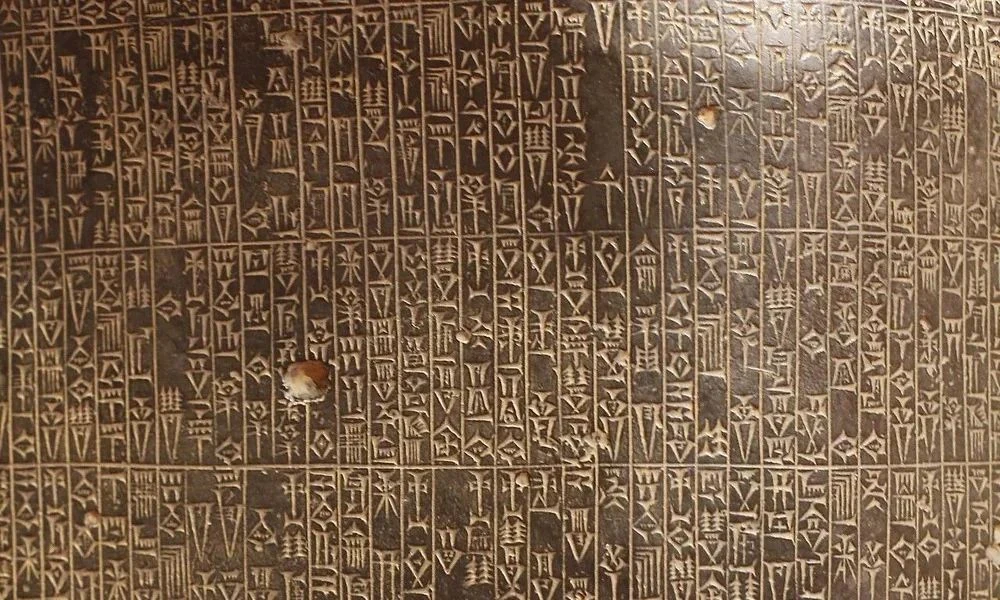
The international team, led by Charlotte Pearson of the University of Arizona, published its findings in Proceedings of the National Academy of Sciences. The researchers addressed a persistent difficulty in ancient history: Mesopotamia has abundant king lists, administrative documents and astronomical observations, yet fitting those records to exact calendar years remains challenging. Ancient scribes generally dated events by royal reigns, while astronomical observations can permit several possible chronological alignments. Consequently, historians have worked with competing timelines for the same rulers and events.
The team investigated preserved timbers from Anatolian sites connected with Mesopotamia through the Old Assyrian trading network. Their tree-ring sequences already recorded the passage of successive years, but lacked a secure position in the calendar. Working with ETH Zurich, the researchers measured carbon-14 in individual annual rings and matched the resulting patterns against independently dated reference material. This anchored the combined Anatolian sequence to calendar years spanning 2072 to 744 BCE, creating a reference for dating other ancient wood samples.
Dating the timber provided a bridge between physical evidence and written history. The researchers combined the newly anchored tree-ring chronology with archaeological relationships and high-resolution ice-core evidence to evaluate the rival Mesopotamian timelines. Their results strongly favour the framework known as the middle-low chronology. Within that framework, the campaign of the Hittite king Mursili I that brought down Babylon’s first dynasty falls around 1587 BCE. The date concerns the end of the Old Babylonian kingdom, centuries before the city’s conquest by Cyrus the Great.
You Might Also Like



The implications extend beyond a single military campaign. Mesopotamian rulers and trading communities maintained connections across Anatolia, northern Syria and the eastern Mediterranean, so refining one region’s chronology helps align events elsewhere. The findings also distinguish two levels of precision: individual tree rings can now be assigned calendar years, while connecting historical events to those rings still requires interpretation of archaeological and textual evidence. The study offers strong support for a particular timeline rather than eliminating every remaining uncertainty in the ancient Near East.