
Search for Noah’s Ark turns up charred wood
A research team investigating the boat-shaped Durupınar formation in eastern Türkiye has reported finding charred wood about nine metres below the surface. The samples were sent for radiocarbon dating and species identification, but neither the reported find nor the preliminary radar results establish a link to an ancient vessel.
- The project’s backers say drilling recovered charred wood about nine metres beneath the Durupınar formation in eastern Türkiye.
- Preliminary radar patterns do not establish that the site contains a ship or another human-made structure.
- The samples were sent for laboratory analysis; earlier geological research identified Durupınar as a natural rock formation.
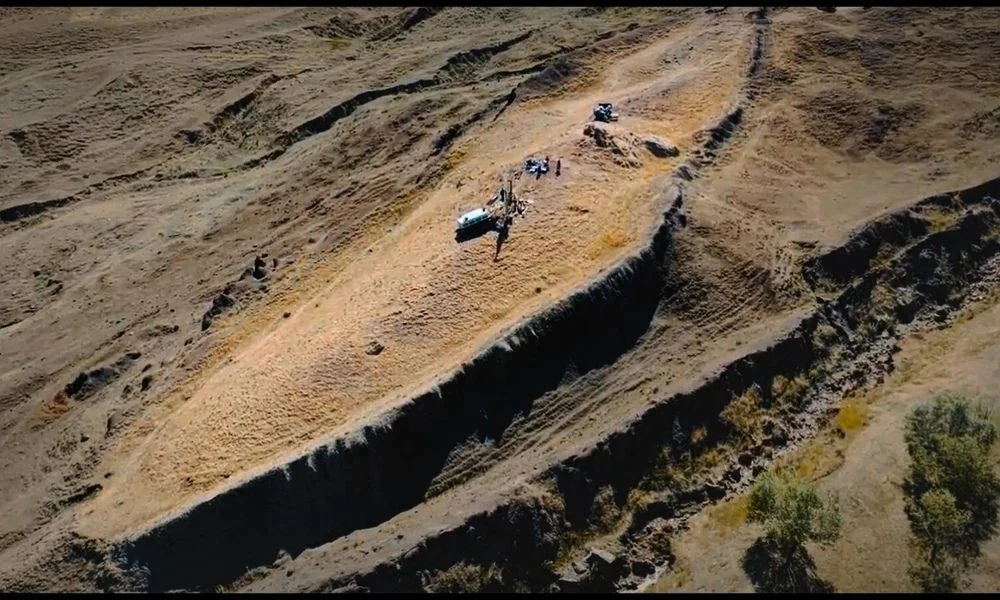
The 2026 fieldwork took place near Üzengili, in the Doğubayazıt district of Ağrı province. Led by archaeologist Cenker Atila of Sivas Cumhuriyet University, the team used ground-penetrating radar and drilled boreholes to collect samples. Noah’s Ark Scans, an organisation supporting the research, reported the recovery of charred fragments in a statement on 27 October. No radiocarbon date for the reported wood had been made public by 9 November.
At an October symposium, Atila described preliminary radar results showing linear features, possible voids and what appeared to be three layers. Project participants compared the patterns to corridors and compartments and drew a parallel with the three decks described in Genesis. Radar detects changes in the materials beneath the surface, however, and cannot identify a deck or a wall by its shape alone. Atila acknowledged that a feature resembling a corridor could have a geological explanation.
The roughly 157-metre formation has attracted attention since it was identified in aerial photographs in 1959. Its outline and location prompted comparisons with the biblical vessel, which Genesis places in the mountains of Ararat. In 1996, Lorence Collins and David Fasold concluded that Durupınar was a natural fold in sedimentary rock. Their analysis found that features previously presented as metal fittings and fossilised wood were instead geological materials.
You Might Also Like

Finding wood at depth does not establish its age or explain how it got there. Radiocarbon dating can help determine when the wood formed, but even an ancient date would not show that the fragments came from a ship. To make that case, researchers would need to document the surrounding sediment, consider whether the material could have been moved by water or slope movement, and look for evidence of woodworking or construction.