Rembrandt’s Night Watch reveals its hidden microbial inhabitants
Researchers examining Rembrandt’s The Night Watch have identified bacteria commonly associated with human skin and soil, alongside a species first discovered at a Japanese sugar refinery. The findings reveal an invisible community on the painting, although scientists cannot establish when or how its inhabitants arrived.
- Researchers are examining microbes collected from around sixty locations on Rembrandt’s painting during a six-month sampling programme.
- One bacterial species was first identified at a Japanese sugar refinery, but its route to the painting remains unknown.
- Cultured colonies feature in an Amsterdam exhibition opening on 11 November.
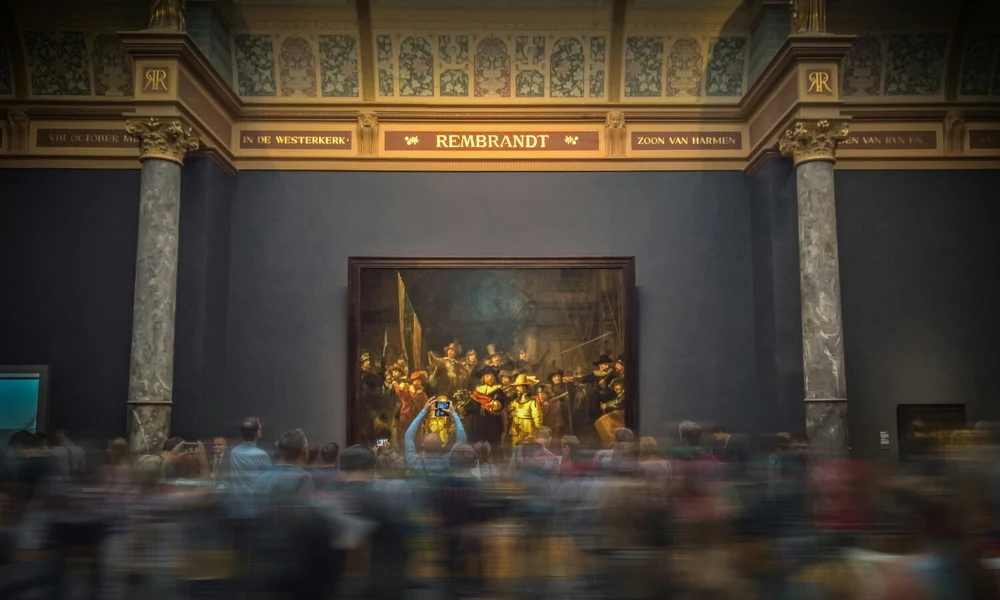
The investigation brings together conservators from Amsterdam’s Rijksmuseum and laboratory specialists at ARTIS-Micropia, the city’s museum dedicated to microorganisms. According to ARTIS, the six-month programme involves sampling around sixty locations on the painting, including areas with and without varnish. Microbes collected from its surface are cultured in the laboratory until they form visible colonies. Initial results have been announced, and further sampling and analysis will continue over the coming months.
Many of the organisms identified are familiar inhabitants of everyday environments. They include Staphylococcus epidermidis and Micrococcus luteus, both associated with human skin, as well as bacteria found in soil and around plant roots. Microbiologist Eline van Bloois told AFP that the microbes identified do not harm the painting. Their presence nevertheless raises questions about the artwork’s contact with people and its surroundings throughout its history.

One unexpected finding was Microbacterium saccharophilum, a bacterial species first identified in 2013 at a Japanese sugar refinery. Researchers detected it on a section of the painting where varnish had been removed. That earlier discovery does not establish that the bacteria on Rembrandt’s canvas came from Japan. Their route to the artwork remains unknown, as does the length of time they have been there. Van Bloois also cautioned that the findings cannot link any microorganism to Rembrandt himself: identifying a bacterium does not reveal whether it arrived centuries ago or recently.
You Might Also Like

The work forms part of Operation Night Watch, the research and restoration programme launched in 2019 inside a purpose-built glass chamber at the Rijksmuseum. Its microbial findings are presented in The Night Watch Lives, an installation at ARTIS-Micropia open from 11 November 2026 until the end of May 2027. Visitors can examine cultured colonies in Petri dishes beside a life-size reproduction of the painting. Further results will be added as the investigation progresses, showing how even a carefully preserved masterpiece remains in contact with a living environment.