Thief destroys Saint Nicholas relic in French basilica
A bone fragment venerated as a relic of Saint Nicholas has been stolen and destroyed at the basilica of Saint-Nicolas-de-Port in north-eastern France. According to a parish statement reported by The Jerusalem Post, a suspect admitted breaking its protective glass before burning and crushing the fragment.
- A suspect reportedly admitted burning and crushing a bone fragment venerated as a relic of Saint Nicholas.
- The basilica’s heritage association confirmed that its principal relic was unaffected.
- The destroyed fragment had been displayed beneath a statue since the early 2000s.
The basilica’s priest reported the theft to police in Dombasle-sur-Meurthe on 2 November. Investigators subsequently identified and arrested a suspect. The parish of Saint-Nicolas-en-Lorraine expressed profound sadness, describing the destruction as an affront to local history, religious faith and generations of pilgrims. Its statement emphasised the relic’s importance as a tangible connection with Lorraine’s patron saint, whose veneration extends well beyond the region.
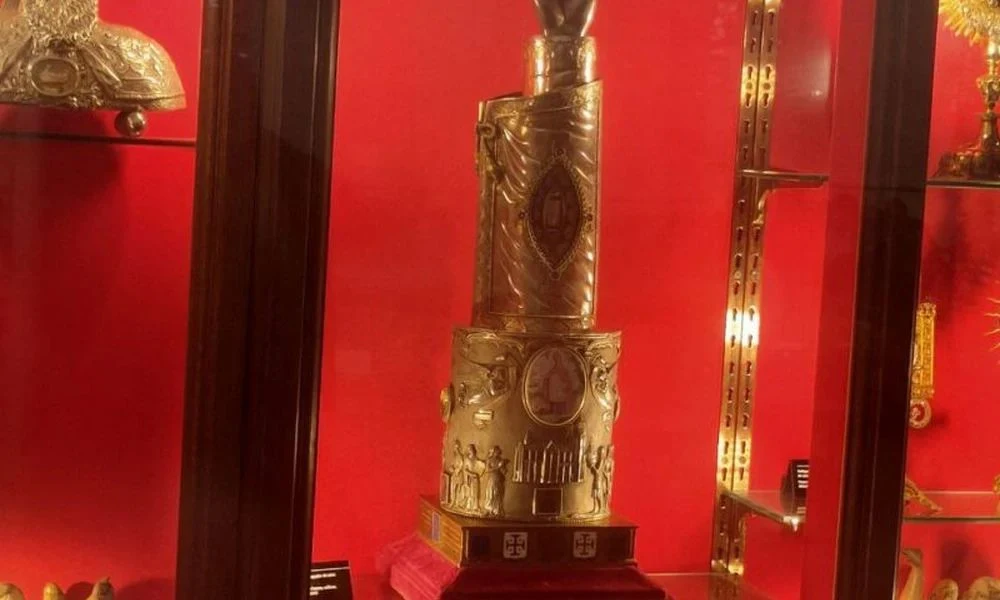
The basilica’s heritage association issued an important clarification on 7 November: the stolen fragment was separate from the principal relic housed in an arm-shaped reliquary in the treasury. The fragment had been installed beneath a statue in the chapel dedicated to Saint Nicholas in the early 2000s. The treasury relic was unaffected. The discovery therefore does not mean that the basilica has lost the principal object associated with its longstanding pilgrimage tradition.
The town’s connection with Saint Nicholas reaches back to the late 11th century. According to tradition, a knight named Aubert de Varangéville brought a finger bone from Bari to Port around 1090, prompting the construction of a church to accommodate pilgrims. Relics attributed to Nicholas had been taken from Myra to Bari in 1087. However, the heritage association acknowledges uncertainties surrounding the provenance of individual fragments now held at Saint-Nicolas-de-Port, making it inappropriate to identify the destroyed bone as the one brought by Aubert.
You Might Also Like
Nicholas was bishop of Myra, in present-day Turkey, during late antiquity. Although reliable details of his life are scarce, traditions celebrating his generosity established him as a protector of children, sailors and travellers. His continuing importance in Lorraine is reflected in the basilica’s annual torchlit procession. The Diocese of Nancy and Toul told Aleteia that the principal reliquary used during that ceremony remained intact. A Mass of reparation is planned for 20 November, while this year’s procession is scheduled for 5 December.