
Divers spot step-like formations beneath Lake Titicaca
Divers from the Bolivian navy’s recreational diving club have identified underwater rock formations resembling steps or an old wall near Lake Titicaca’s Island of the Sun. Their appearance has prompted archaeological interest, but specialists have yet to establish whether they are human constructions or natural formations.
- Bolivian navy divers identified underwater rocks resembling steps or a wall near the Island of the Sun.
- Their age and origin remain unknown, and human construction has not been established.
- Previous excavations elsewhere in the lake have documented Tiwanaku and Inca ritual offerings.
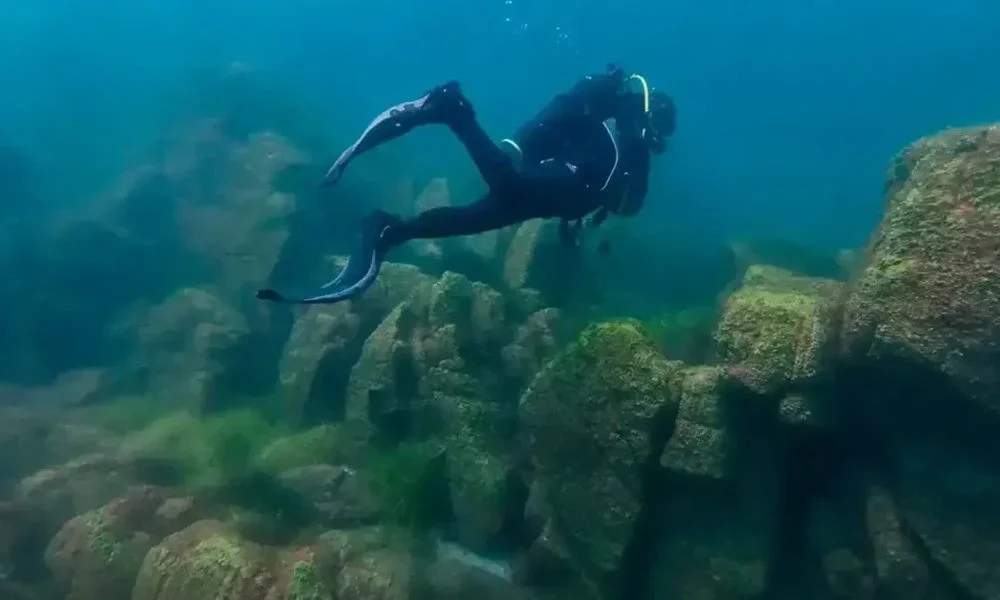
Captain Max Álvaro Villarroel Muñoz, commander of the navy’s High-Altitude Diving Training Centre, described the observation to Bolivia’s state news agency ABI. In reports published on 12 November, he emphasised that the lake contains numerous rock formations and that scientific investigation would be needed to determine whether these examples have archaeological significance. Their age remains unknown, and the divers’ observations alone cannot establish the presence of ancient ruins. No connection with a particular civilisation has been demonstrated.
The interest surrounding the formations reflects Lake Titicaca’s substantial underwater heritage. Bolivia launched a research programme with the Université libre de Bruxelles in 2012, building on earlier expeditions. UNESCO reported that more than 1,350 dives had identified approximately twenty submerged sites and over 20,000 objects associated with the Tiwanaku and Inca periods. Those results demonstrate the lake’s archaeological potential, although they do not establish the origin of the newly observed stones.
Earlier discoveries include ritual deposits at Khoa Reef near the Island of the Sun, where researchers recovered gold ornaments, ceramic incense burners, shell objects and remains of sacrificed young llamas. A 2019 study linked these offerings to Tiwanaku ceremonies performed between the eighth and tenth centuries AD. Research published in Antiquity in 2020 also examined an Inca offering at K’akaya Reef: a stone box containing a shell figurine and rolled gold foil. These finds show that ritual activity extended beyond temples on land into the lake itself.
You Might Also Like

The island’s human history stretches considerably further back. A study published online in Latin American Antiquity in March 2026 used new radiocarbon measurements from archived charcoal to place occupation at Ch’uxuqullu at least as early as 3500 BC. Authors Charles Stanish and Brian Damiata concluded that watercraft were essential for reaching the island for at least the past 5,000 years. This provides a deeper history of settlement and movement around Titicaca, but no demonstrated link with the formations reported by the divers. Their archaeological significance remains an open question.