
The Headless Horseman may have real wartime origins
A Hessian soldier killed by an American cannonball in 1776 may have helped inspire Washington Irving’s Headless Horseman. As the Battle of White Plains approaches its 250th anniversary, the resemblance between a recorded battlefield death and The Legend of Sleepy Hollow offers a compelling, though unproven, connection between history and fiction.
- A Revolutionary War memoir records a Hessian artilleryman’s death by decapitation near White Plains.
- The incident resembles Irving’s story, but a direct connection remains unproven.
- The battle’s 250th anniversary coincides with museum programmes exploring the legend’s historical background.
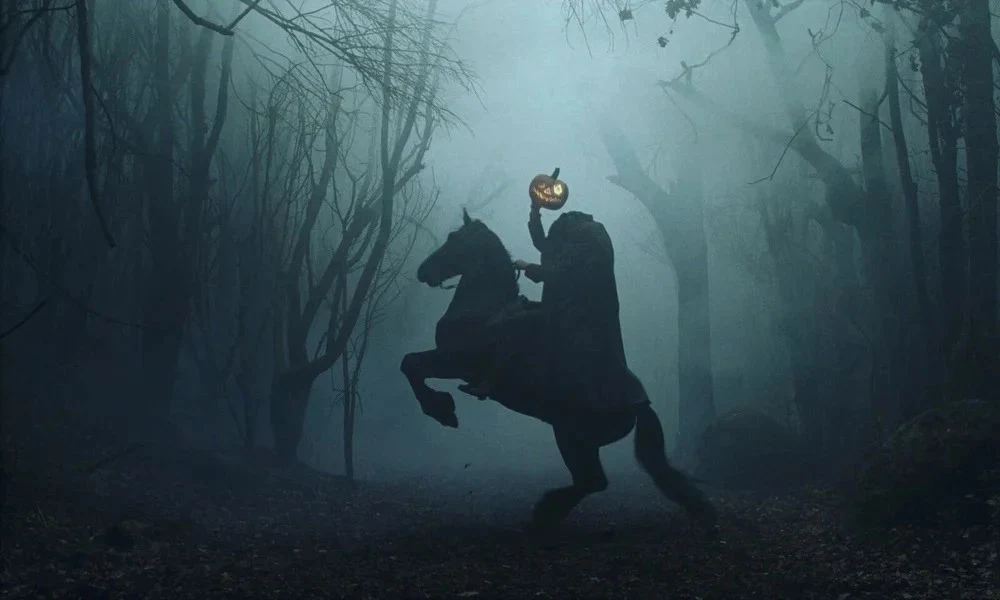
The historical episode appears in Major General William Heath’s memoirs, first published in 1798, as Clermont State Historic Site explains. On 28 October 1776, British and Hessian troops fought George Washington’s army at White Plains, north of New York City. Skirmishing continued afterwards. In his entry for 1 November, Heath described British artillery approaching the American right, where previously concealed twelve-pounder guns forced it to withdraw. An American shot decapitated a Hessian artilleryman; an artillery horse was also left dead. His account does not establish that the same projectile killed both.
Published in 1820, Irving’s story places a strikingly similar figure in the nearby Hudson Valley. Its feared apparition is said to be a Hessian soldier whose head was carried away by a cannonball during an unnamed Revolutionary War battle. The geographical proximity and matching manner of death make Heath’s account a plausible source. They do not, however, demonstrate that Irving read the memoir or deliberately transformed its unnamed casualty into his ghostly rider. The soldier’s death and the literary character’s creation remain separate historical questions.
There are other possible influences. Headless riders already appeared in European folklore, providing a tradition that predated the American Revolution. Historian Elizabeth Bradley has also identified Sir Walter Scott’s The Chase, a translation of a German supernatural poem, as a possible literary influence. Irving’s achievement may therefore have involved bringing familiar European motifs into an American landscape marked by memories of war. His story also preserves ambiguity: the terrifying rider might be a supernatural presence, or a disguise used to frighten the impressionable schoolmaster Ichabod Crane.
You Might Also Like



This October, the historical setting is receiving renewed attention. Westchester County’s REV FEST 250, scheduled for 24 and 25 October, will commemorate the White Plains campaign with living-history activities and a battle re-enactment. On 31 October, Philadelphia’s Museum of the American Revolution will offer gallery talks examining the Headless Horseman’s possible Hessian origins. These programmes provide an opportunity to explore the wartime experience behind the legend, while keeping the documented death distinct from the enduring fictional haunting.