
AI reportedly deciphers 1941 Enigma message
An AI system reportedly deciphered an 82-letter Enigma message from July 1941 in two days, according to Tom's Hardware. Its report describes a modern cryptanalysis attempt on a transmission shared with enthusiasts online in 2005.
- A technology report credits an AI system with recovering the plaintext of an 82-letter German wartime transmission.
- The reported search used the repeated place name Rosenow as a probable plaintext clue.
- - The supplied account provides no machine settings or independent verification of the claimed result.
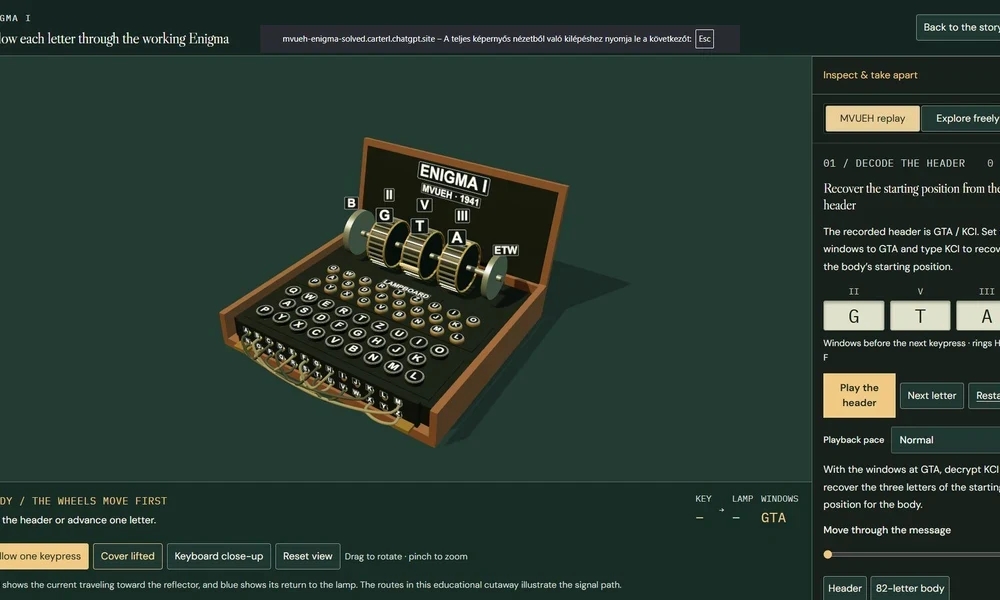
The account credits a system it calls ChatGPT-6 Astra with selecting message number 172, identified as MVUEH, from material published by Crypto Cellar Research. It reportedly suspected a connection with the plaintext of another message, number 173, and used the repeated place name Rosenow as a likely clue. The system then developed Python and C++ software to simulate an Enigma machine and a Bombe, a tool for searching possible cipher settings.
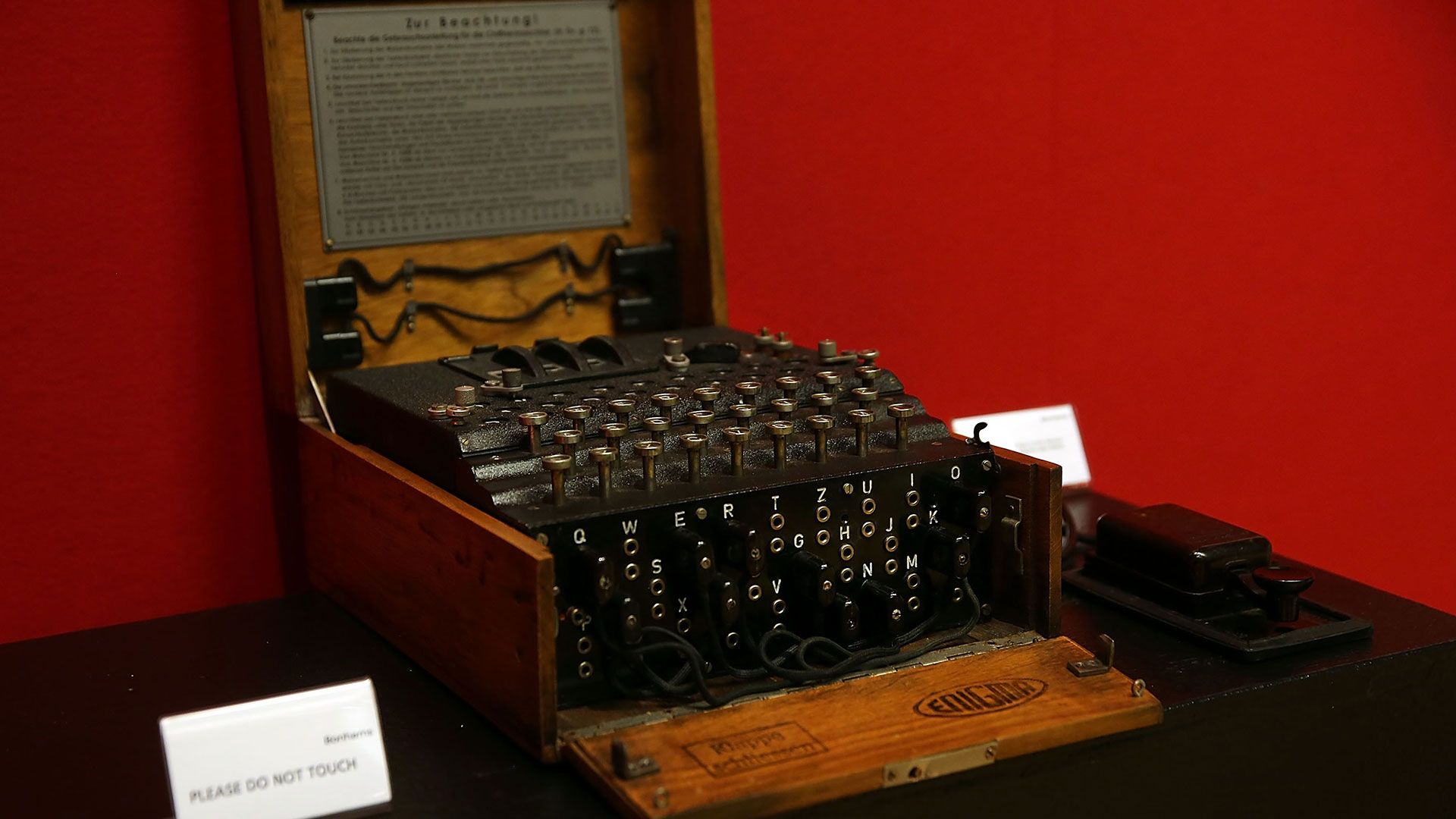
According to the report, the transmission was sent by the German Army to the SS-Totenkopf Division on 10 July 1941. The proposed German plaintext asks for a route of march, gives the sender's location as Rosenow and requests an immediate radio reply. It includes non-standard spellings and a final group that the accompanying English translation does not explain. The reproduced ciphertext and plaintext each contain 82 letters when spaces are removed, although this agreement alone cannot authenticate the decryption.
Enigma operators needed matching machine settings to exchange readable messages. These included rotor order, ring settings, starting positions and plugboard connections, which altered the electrical paths used to encipher letters. Possessing a machine therefore did not by itself reveal the contents of a transmission. A suspected fragment of plaintext could provide a starting point for testing candidate settings; in the reported attempt, the repeated place name supplied that clue.
You Might Also Like

Tom's Hardware attributes the claim of autonomous operation to Crypto Cellar researchers, who were reportedly still examining the logs. The supplied account does not reproduce the recovered machine settings, provide computational resource details or include an independent assessment. It also does not establish whether the two-day duration includes all software development and testing. The result is therefore presented as a reported solution, with its technical verification unavailable in the supplied material.