
Field telephones offer clues to Poland’s 1939 retreat
Two military telephones found in woodland near Sochaczew, west of Warsaw, may offer clues to Polish troop movements during the September 1939 campaign. The search groups involved believe the devices could have belonged to a unit of the Łódź Army.
- Two military telephones found near Sochaczew may date from Germany’s invasion of Poland in September 1939.
- Searchers provisionally identified the devices as Polish AP-27 field telephones, possibly associated with the Łódź Army.
- Their location could help researchers investigate troop movements, although their ownership and circumstances of abandonment remain uncertain.
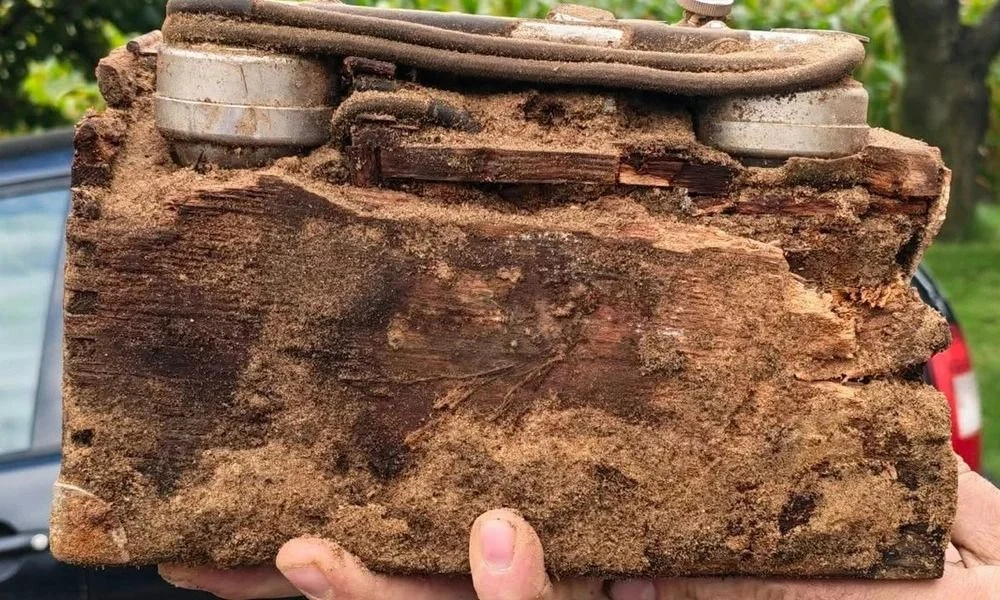
Members of the Sochaczew history research group discovered the equipment while searching with the VIS historical and research association in an area affected by heavy fighting. Other finds included rifle cartridge cases, a rucksack buckle, a military identification tag and coins. The two telephones, provisionally identified as Polish AP-27 models, were reportedly unusually well preserved after decades underground. Their position suggests they may have been concealed deliberately or abandoned near a route used by withdrawing troops.
The Łódź Army, commanded by General Juliusz Rómmel, initially defended part of western central Poland following the German invasion on 1 September 1939. German breakthroughs subsequently forced its formations to retreat eastwards and north-eastwards. Farther north, the Poznań and Pomorze armies were also withdrawing. On 9 September, those two armies launched a counterattack near the Bzura River against German forces advancing towards Warsaw.
The resulting Battle of the Bzura became the largest engagement of the 1939 campaign in Poland. Despite initial Polish successes, German forces regrouped and used their superiority on the ground and in the air to encircle Polish formations. As continuing the counterattack became impossible, Polish sought to move units still capable of fighting towards Warsaw. Routes through the Sochaczew area and Kampinos Forest became important escape corridors, but German attempts to block them brought further heavy fighting from mid-September. Only part of the encircled force escaped.
You Might Also Like


Large quantities of military equipment were left behind during the fighting and withdrawals. The telephones could add to the material evidence for these movements, but their precise history remains unknown. Their proposed association with the Łódź Army is an interpretation by the searchers, rather than a confirmed identification of the unit that used them. The findspot alone cannot establish when the devices were deposited, whether they were hidden together deliberately, or which soldiers left them behind.