
Excavations reveal grand bishop’s palace from Otto’s reign
A rare medieval clay water pipe and further remains of a bishop’s palace have emerged during excavations on Posa Hill near Zeitz, Germany. Saxony-Anhalt’s heritage and archaeology authority announced the findings from its 2026 excavation season on 1 October.
- Archaeologists uncovered a rare 14th-century clay water pipe at the former Posa monastery near Zeitz, Germany.
- Excavations also revealed further details of a bishop’s palace and evidence of an earlier fortified settlement.
- Researchers interpret the monastery’s plumbing and heated rooms as evidence of continued prosperity during the late Middle Ages.
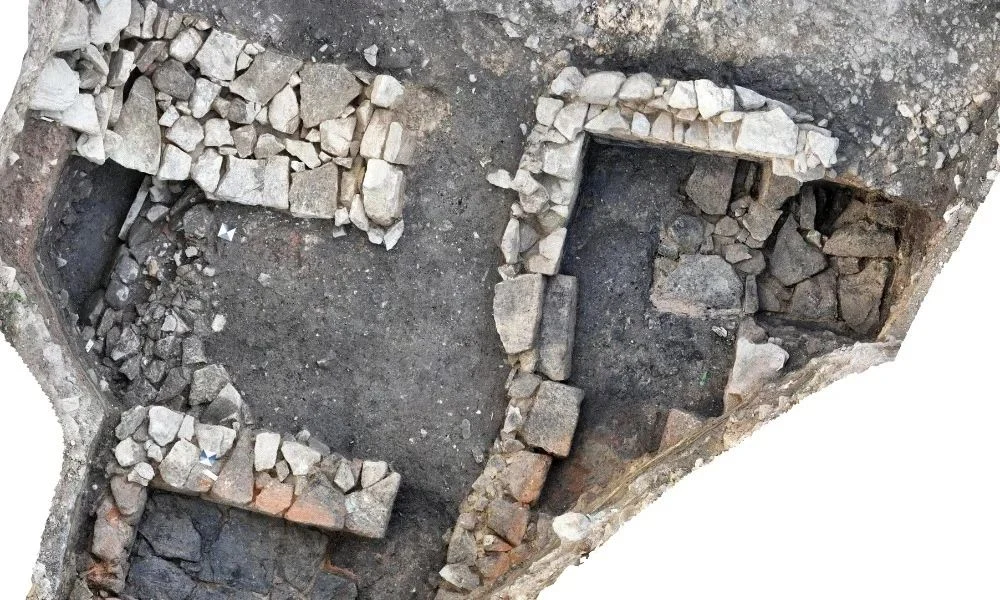
The pipe, dated to the 14th century, was exposed over approximately five metres in the former Benedictine monastery’s southern courtyard. Its wheel-thrown, fired-clay sections measure around 70 centimetres long and 12 centimetres in diameter. Shaped ends allowed the tubes to fit together, with clay sealing the joints. According to the authority, comparable early ceramic pipelines are known from only a few monasteries and castles in southern Germany. Two contemporary warm-air heating systems and a red screed floor also indicate well-equipped monastic buildings.
The discoveries belong to a site whose history extends back well before the monastery. A ninth-century fortification occupied more than eight hectares on the hill. This season, archaeologists identified traces of a wall approximately 1.7 metres wide that may have belonged to a tower. Following a fire in the late tenth century, the wall was abandoned and the defences shifted southwards, creating space for houses. Pottery recovered from the remains should help refine the sequence’s dating.
The fortified site subsequently accommodated the bishopric of Zeitz, founded by Emperor Otto I in 968 CE. Excavations in previous seasons had already exposed substantial portions of its imposing palace, approximately 18 metres wide and several storeys high. This year’s work revealed a partition in the lower storey and a surviving screed floor laid over carefully arranged pebbles. Glass windows and elaborate masonry further demonstrate the investment in the residence, which the researchers compare with buildings at Paderborn, Goslar and Merseburg.
You Might Also Like


The episcopal seat moved to Naumburg in 1028, although the complex remained in use. A Benedictine monastery was founded on the hill in 1114. Excavations now show that its buildings extended farther south than previously thought, including a Romanesque structure whose function remains unknown. The authority interprets the water pipe and heating systems as evidence against a simple narrative of late medieval decline at Posa. Further work is planned on the early fortification’s southern edge.