
Low Danube reveals wartime motorcycle and soldiers’ remains
Low water in the Danube exposed a German military motorcycle and the remains of two soldiers in Budapest in August 2026. Hungary’s military history museum identified the vehicle as a DKW NZ 350-1, while explosives specialists cleared wartime munitions from the site.
- Low water exposed a German DKW NZ 350-1 motorcycle near Budapest’s Batthyány Square in August 2026.
- Specialists found wartime ammunition and mines nearby, requiring bomb disposal operations before recovery could proceed.
- - Two German soldiers’ remains were also recovered, prompting an identification investigation by the German war graves organisation.
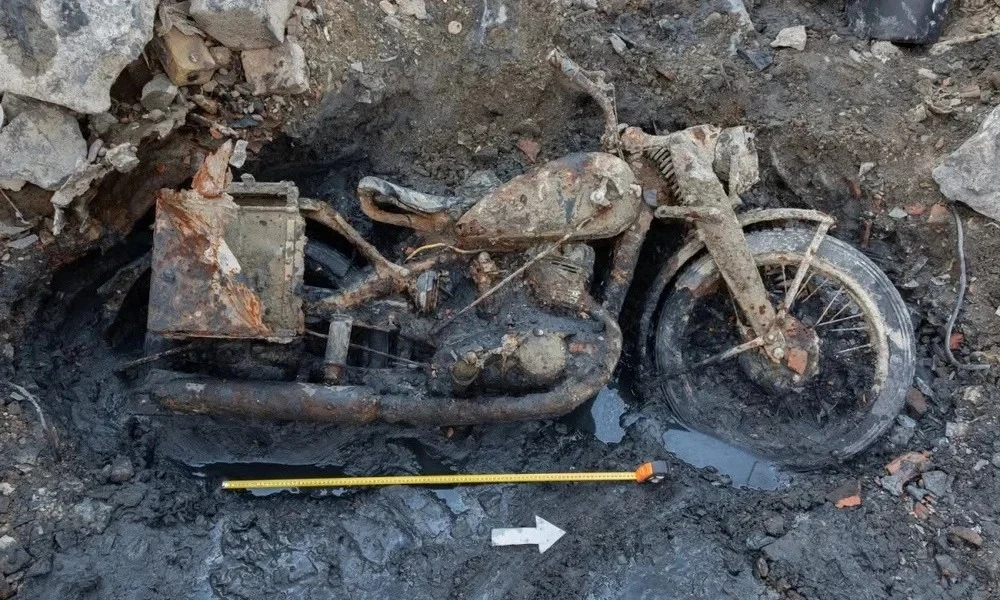
Passers-by noticed part of the motorcycle protruding from rocks beside the Batthyány Square embankment, opposite Hungary’s Parliament. Museum specialists found an almost complete vehicle, accompanied by mines, grenade fragments and ammunition. The authorities secured the area, and military bomb disposal personnel intervened before excavation continued. Further discoveries required another clearance operation and a temporary closure of part of the embankment.
The surrounding material included German and Soviet small-arms ammunition, animal bones and civilian ceramics. This mixture led museum researchers to suggest that the site might represent a disposal pit filled with military equipment and other debris after the siege of Budapest. That interpretation leaves open precisely when and how the motorcycle entered the river. Mud had preserved much of the machine, although parts periodically exposed by changing water levels showed greater corrosion.
Human remains beneath the motorcycle made the recovery a war graves investigation as well as an archaeological operation. Hungarian specialists handed responsibility for the German dead to their partner organisation, Volksbund Deutsche Kriegsgräberfürsorge, which recovered two soldiers. Well-preserved identification discs offered potential clues, but the organisation stressed that establishing whether the discs belonged to the individuals required further investigation. Its August report did not announce confirmed personal identities.
You Might Also Like
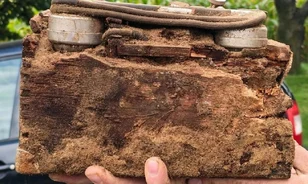

The motorcycle was transported to the museum’s Budapest premises for cleaning and conservation. Specialists subsequently opened its side storage box, finding tools and maintenance supplies, including a spark plug, spanners, a tyre-pressure gauge and puncture-repair materials. These objects add evidence of the equipment carried with the vehicle. Their preservation offers opportunities for study, while the motorcycle’s precise service history and its relationship to the recovered soldiers remain unresolved.