
Magritte masterpiece punctured with pinecone at Israel Museum
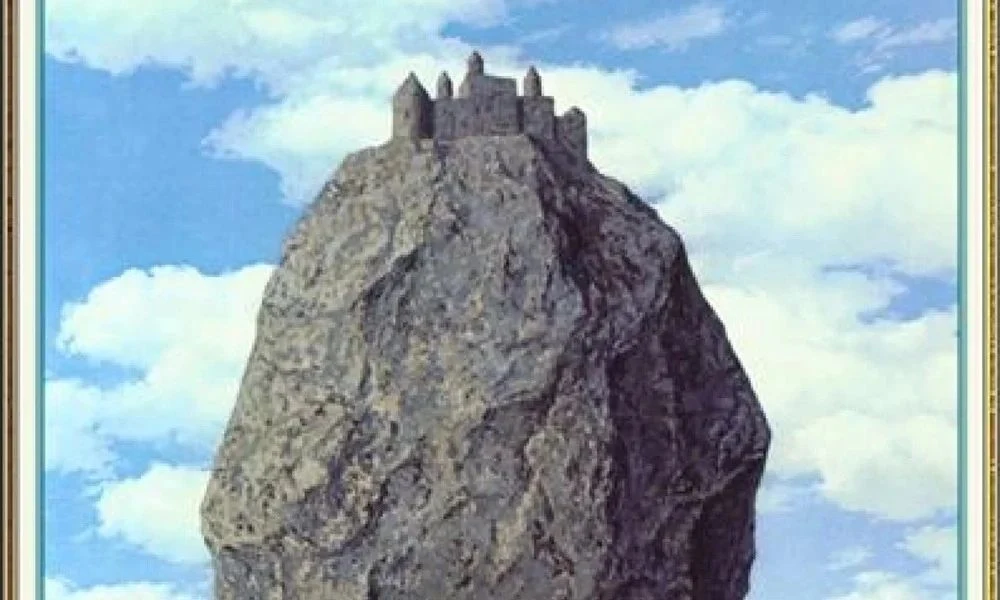
René Magritte’s The Castle of the Pyrenees was punctured with a pinecone by a young visitor at the Israel Museum in Jerusalem. The incident, reported by The Times of Israel on 9 June 2026, sent the painting from the galleries to the conservation laboratory.
- A child punctured René Magritte’s The Castle of the Pyrenees with a pinecone during a family museum visit.
- Conservators treated the damaged canvas and oil-paint layers after the incident, reported in June 2026.
- Commissioned by Harry Torczyner, the 1959 painting entered the Israel Museum’s collection as his gift in 1985.
The boy was visiting with his family and had collected the pinecone in the museum’s sculpture garden. According to museum staff cited in the report, the damage occurred within seconds, before a gallery guard noticed what was happening. The account establishes how the canvas was punctured, but does not establish the child’s motive. The painting was removed for specialist treatment rather than left on display.
Sharon Tager, head of the museum’s conservation laboratories, told Haaretz that repairs would take several weeks, The Times of Israel reported. The work involved mending the canvas and carefully treating the damaged layers of oil paint. A subsequent August report described conservators reconnecting canvas fibres under a microscope. Their task was to stabilise the painting and repair the affected area while preserving as much original material as possible.
Painted in 1959, The Castle of the Pyrenees depicts an enormous rock topped by a castle, suspended above the sea. Its precisely rendered surfaces give an apparently tangible form to an impossible scene. The Israel Museum describes this combination of realistic detail and defiance of physical laws as characteristic of Magritte’s work. The picture was commissioned by his friend and patron Harry Torczyner, a lawyer who wanted it to cover an unattractive view from his New York office.
You Might Also Like
Torczyner donated the painting to the Israel Museum in 1985, where it became a prominent work in the permanent collection. While the original underwent conservation, an anonymous Belgian collector offered the museum a smaller, related Magritte work: a 1962 gouache on paper showing another version of the floating castle. The Jerusalem Post reported the loan on 3 August 2026. At that stage, the museum expected the oil painting to return to its usual gallery position after treatment, but the report did not give a firm completion date.