
Garage-kept Spitfire fuselage fetches £18,000 at auction
A reconstructed Spitfire fuselage kept in an English garage for more than two decades sold for £18,000 at auction on 8 October. The unfinished project belonged to Peter Arnold, an aviation historian and collector whose lifelong dedication to the aircraft earned him the nickname “Mr Spitfire”.
- The unfinished reconstruction was the final project of aviation historian Peter Arnold, known as “Mr Spitfire”.
- Arnold kept the fuselage in his Newport Pagnell garage and occasionally wheeled it outside for visitors.
- The auction lot combined surviving PK519 components with original parts from other Spitfires.
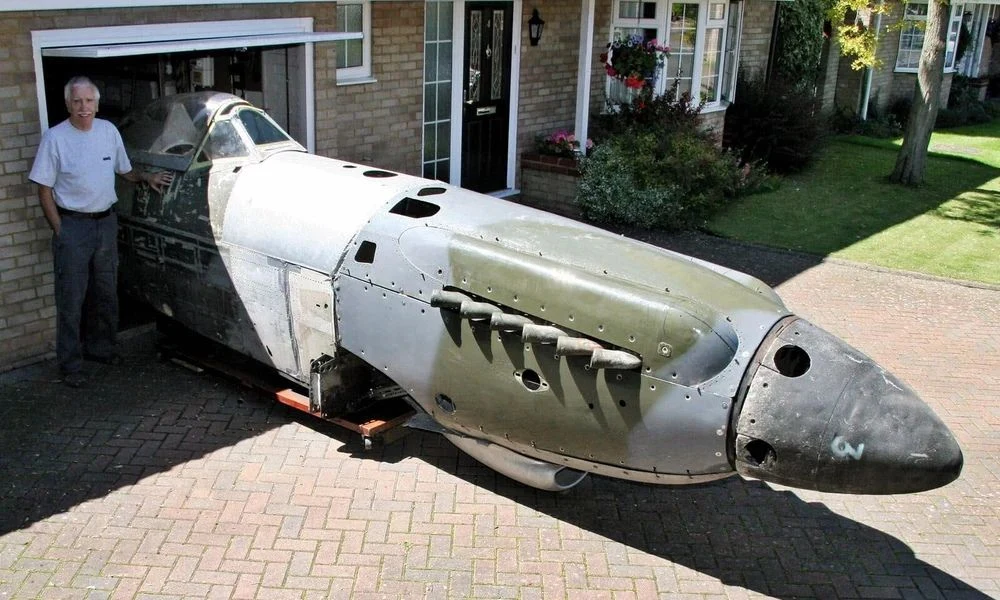
Dominic Winter Auctioneers offered the Supermarine Spitfire F Mk 22 project, identified as PK519, alongside other items from Arnold’s collection. The hammer price was below its estimate of £20,000 to £30,000; the total including buyer’s premium was £21,960. Arnold, who died in 2025 aged 83, had housed the fuselage at his home in Newport Pagnell, Buckinghamshire. He sometimes wheeled it outside for people to admire, making an aircraft restoration project an unusual feature of the neighbourhood.
PK519’s documented history began with an order placed on 2 June 1943, rather than a confirmed start of construction that month. Originally ordered as a Mk IX, it was ultimately completed as a Griffon-powered Mk 22. After its flying career, the aircraft became a ground target on Salisbury Plain. Aviation historian Peter Foote located its remains in 1966. Arnold recovered some material himself, while further components reached him through other collectors following Foote’s death in 2001.
The resulting reconstruction brought together material from several sources. Original Spitfire panels were assembled around wooden formers, accompanied by a cockpit window assembly and Perspex canopy. The lot also included five Griffon propeller blades and surviving PK519 wreckage. Its fitted instrument panel was a paper representation for display. Arnold’s interest had begun at school, when he cycled to aircraft crash sites; later employment at Aston Martin helped develop the engineering skills behind his preservation work.
You Might Also Like



The project represents a late chapter in the development of one of Britain’s best-known fighters. Designed by R. J. Mitchell, the Spitfire first flew on 5 March 1936 and became closely associated with the Battle of Britain. Development continued throughout the war and into the post-war years, with the final aircraft built in 1948. Later variants differed substantially from the early Merlin-powered machines. The Mk 22 used the larger Rolls-Royce Griffon engine, reflecting how far the design evolved before jet fighters displaced it.