
Wartime wrecks harbour bacteria linked to oil breakdown
Japanese shipwrecks in Micronesia contain diverse bacterial communities, including groups associated with the breakdown of petroleum hydrocarbons. A new study suggests these polluted environments could inform future biological clean-up research, although it does not establish that the bacteria are actively removing the oil.
- Researchers examined bacterial communities in fuel oil from two Japanese shipwrecks in Chuuk Lagoon.
- DNA analysis identified diverse microorganisms, including groups associated with hydrocarbon breakdown.
- The study provides a starting point for future research, but did not directly test oil degradation.
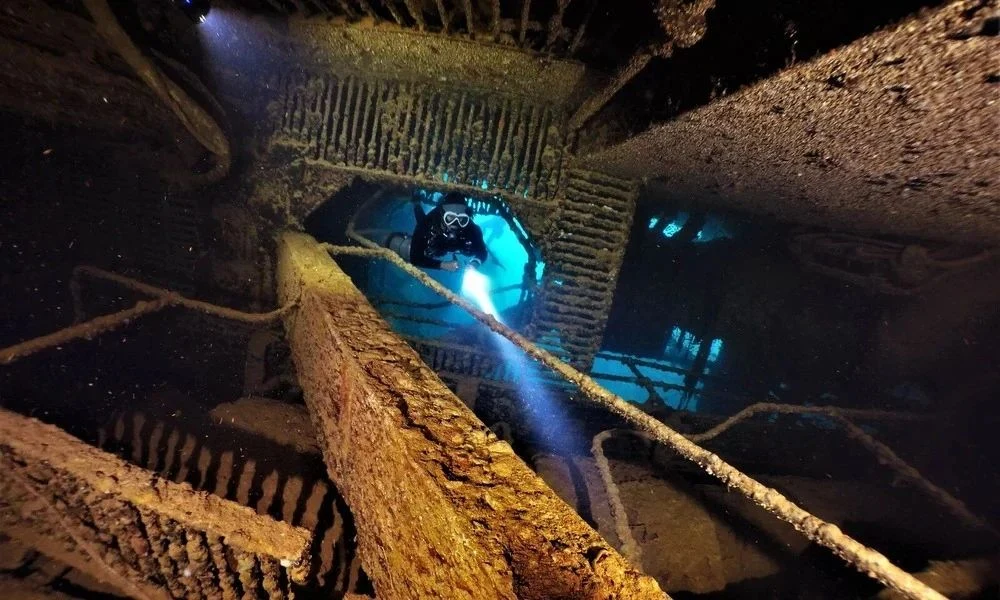
The research, published online in Marine Pollution Bulletin, examined fuel from the Shinkoku Maru and Kiyosumi Maru in Chuuk Lagoon. A team including Awei T. Bainivalu of the University of the South Pacific used DNA sequencing to characterise the microorganisms present. The analysis reported 1,505 species-level bacterial classifications across 42 phyla. Groups identified included Ralstonia, Sphingomonas and Corynebacterium, which contain bacteria associated with hydrocarbon degradation. Their presence indicates potential for further investigation, rather than proof of effective pollution removal.
Chemical analysis also revealed differences between the fuels. One sample contained a mixture of distilled and residual oils, while the other consisted of heavier residual fuel. The bacterial communities varied with both the composition of the oil and the sampling location, including whether material came from the fuel itself or its boundary with seawater. The findings suggest that different conditions around the wrecks favour different microbial communities, even within environments exposed to petroleum pollution for decades.
The wrecks are a legacy of Operation Hailstone, the American assault on the Japanese base at Truk, now Chuuk, on 17 and 18 February 1944. Carrier aircraft struck shipping, airfields and supply facilities in repeated waves. Dozens of Japanese vessels were sunk, including transports, freighters and tankers. Much of Japan’s main battle fleet had already departed, but the attack devastated the anchorage’s logistical infrastructure. Truk was subsequently bypassed by advancing American forces and never again served as a major Japanese fleet anchorage.
You Might Also Like

More than eight decades later, the surviving fuel presents a different challenge. Bioremediation uses biological processes to break down pollutants, but identifying potentially useful bacteria is only an initial step. This study did not directly measure active hydrocarbon degradation, either in the laboratory or around the wrecks. Further work would be needed to establish what the organisms can break down, how quickly they act and whether they could contribute to practical clean-up methods. For now, the research provides a baseline for investigating a persistent environmental consequence of the Pacific war.