
Mudbrick preserves a dog’s footprints for 4,000 years
Around 4,000 years ago, a dog walked across a still-soft mudbrick in what is now western Turkey, leaving impressions that survive today. Archaeologists recovered the brick from a fire-damaged Bronze Age building at Tavşanlı Höyük, preserving a small moment of everyday life within the ruins of an ancient settlement.
- Dog paw prints survived on a mudbrick recovered from a Bronze Age building destroyed by fire.
- Excavations at Tavşanlı Höyük have revealed evidence of settlement, craftsmanship and violent destruction.
- The brick’s precise date and its connection to previously identified destruction layers remain unclear.
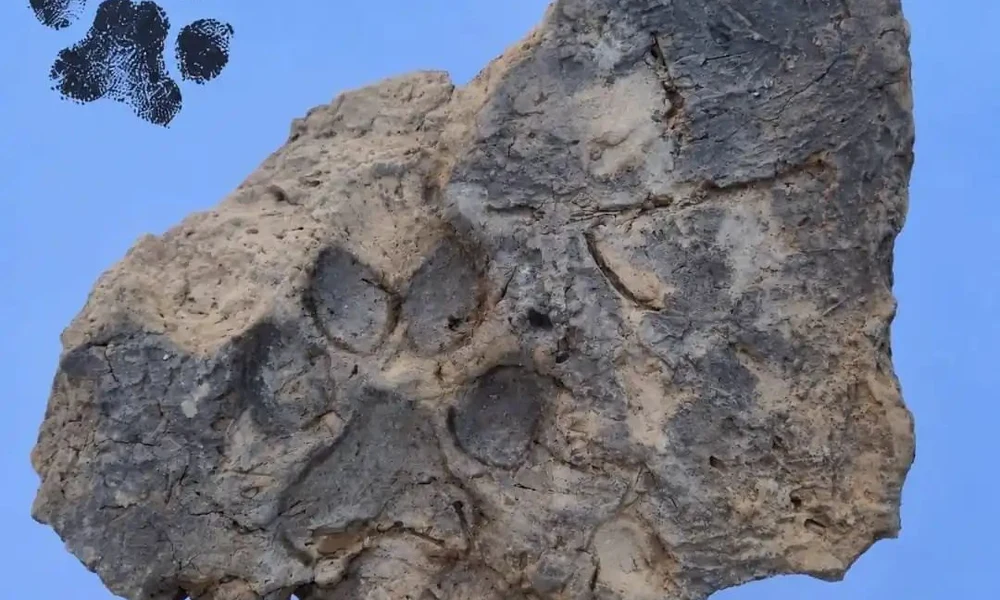
Turkey’s culture and tourism minister, Mehmet Nuri Ersoy, announced the discovery on 26 October. According to the ministry and Bilecik Şeyh Edebali University, the dog crossed the brick before it had dried. The material subsequently hardened, preserving the impressions, and builders incorporated it into a house wall. When the building burned and collapsed, the brick remained among the debris until its excavation thousands of years later.
Mudbrick was a widely used building material in ancient Anatolia. Workers mixed earth, water and straw, shaped the mixture in moulds and left it to dry in the sun. During this process, passing animals could leave permanent marks on the exposed surfaces. The Tavşanlı find records such an encounter between construction work and animal life. Although the building’s destruction explains how the brick entered the rubble, the announcement did not establish whether the fire helped harden and preserve it.
Located in Kütahya province, Tavşanlı Höyük covers approximately 45 hectares and ranks among western Anatolia’s largest Bronze Age settlements. Excavations led by Professor Erkan Fidan began in 2021. The mound accumulated as successive generations built over earlier structures, creating layers through which archaeologists can trace the settlement’s history. Previous finds described in the supplied account include tools associated with pottery, metalworking and textile production, together with a cylinder seal suggesting connections with central Anatolian trading centres.
You Might Also Like
Other discoveries reveal a more violent past. In 2023, researchers reported two people who apparently died beneath a collapsed building during an attack around 1700 BC. One was an adolescent and the other a middle-aged man; carbonised brain and skin tissue survived on the younger individual. However, the recent announcement did not connect the paw-marked brick to that particular destruction event. Its approximately 4,000-year age remains a broad attribution, while its precise archaeological context awaits fuller publication.