
William Walker’s underwater work saved Winchester Cathedral
For approximately five and a half years, William Walker worked beneath Winchester Cathedral in water so murky that he relied on touch. His underwater labour helped make it possible to replace failing foundations and secure the medieval building, according to records held by Hampshire Archives.
- Diver William Walker spent approximately five and a half years helping stabilise Winchester Cathedral’s waterlogged foundations.
- Working largely by touch, he cleared submerged trenches and laid bags of concrete before other workers completed the underpinning.
- His contribution formed part of a major restoration involving engineers, builders and fundraisers, celebrated at a royal thanksgiving service.
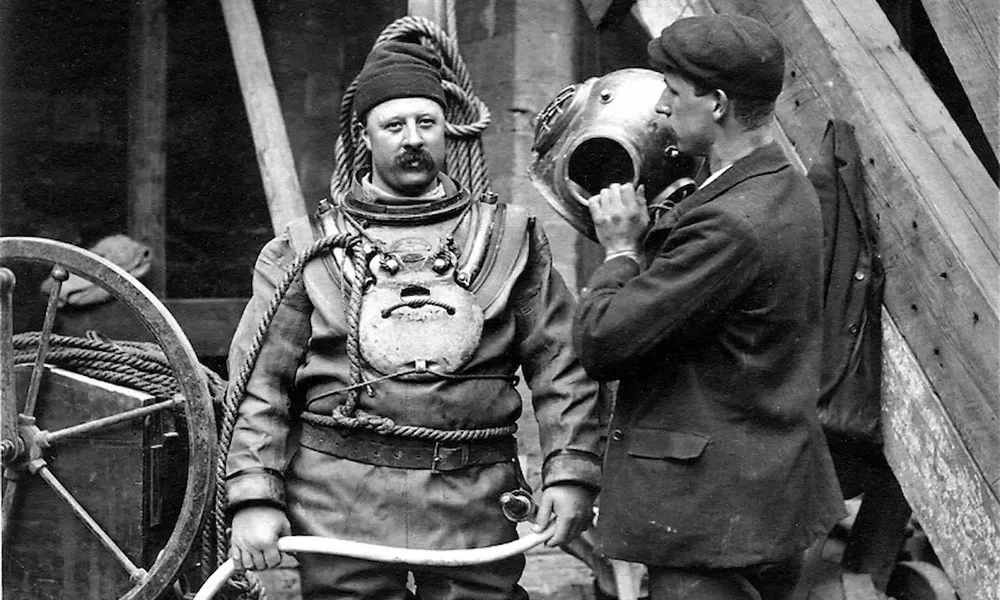
By 1905, serious cracks and subsidence demanded intervention. Architect Thomas Graham Jackson and engineer Francis Fox faced a difficult problem: excavations beneath the building filled with groundwater, while pumping risked further movement. Fox proposed sending a diver into the flooded trenches to remove unstable material and lay bags of concrete. Once these formed a secure base, the water could be removed and other workers could construct permanent supports.
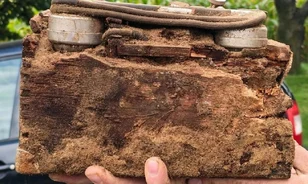
The cathedral’s difficulties reflected the ground beneath it. Layers of peat and waterlogged deposits lay above firmer gravel. Medieval builders had attempted to distribute the structure’s weight using timber, including beech logs beneath the thirteenth-century eastern extension. Over time, the underlying peat compressed. Reaching the stronger ground required work below the water table, turning an architectural repair into an unusual diving assignment.
Walker arrived in 1906 and spent around six hours underwater on working days. In the flooded spaces, he removed peat, sediment and decaying wood before positioning material for the replacement foundations. The suspended sediment prevented him from seeing what he was doing. Progress depended on repeatedly clearing and preparing small areas beneath a building whose weight remained overhead.
You Might Also Like
The rescue required more than Walker’s underwater work. Engineers planned the intervention, other workers prepared materials and built the permanent supports, and fundraising helped sustain the restoration. Once the foundations were secured, a thanksgiving service took place in July 1912. King George V presented Walker with a silver rosebowl in recognition of his contribution. Walker survived the hazardous assignment but died during the influenza pandemic in October 1918. His work remains commemorated inside the cathedral he helped preserve.