
Beethoven’s hair reveals clues to his lifelong illnesses
Nearly two centuries after Ludwig van Beethoven’s death, genetic and toxicological studies of authenticated locks of his hair have revealed evidence of hepatitis B infection, an inherited susceptibility to liver disease and substantial lead exposure. The findings offer new explanations for some of the composer’s chronic illnesses, although they have not established exactly what caused his death in 1827. They also go some way towards fulfilling his wish that doctors explain his suffering to future generations.
- Genetic analysis authenticated five locks of Beethoven’s hair, revealing hepatitis B infection and inherited risk factors that may have contributed to liver disease.
- Toxicological tests on two authenticated locks detected high lead concentrations, providing a possible explanation for some symptoms without establishing the cause of death.
- - A 2025 review examined the findings through modern environmental medicine, emphasising the limitations of retrospective diagnosis and estimates derived from hair measurements.
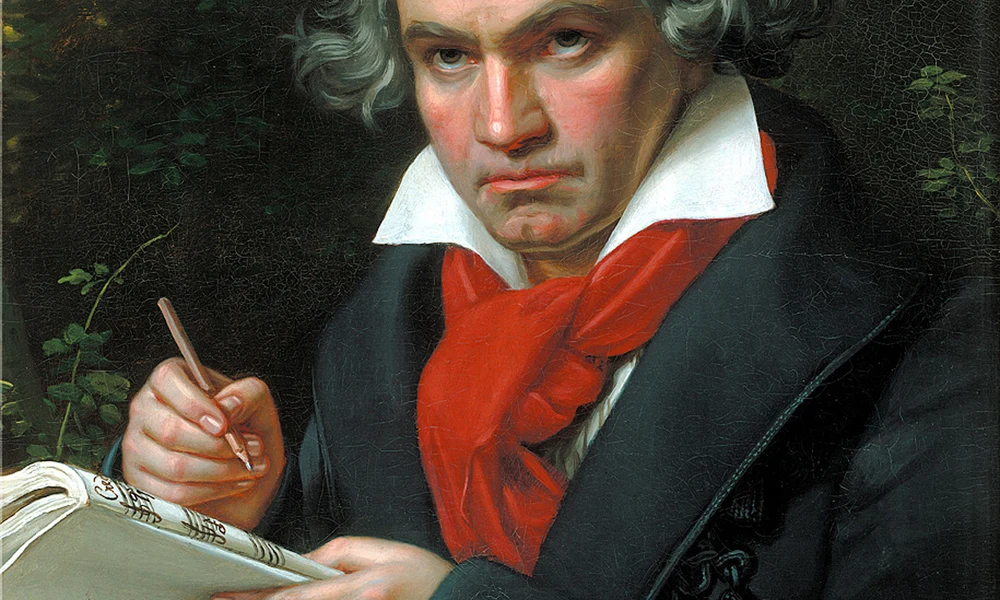
Beethoven gave locks of his hair to several friends, while further samples were collected after his death and preserved by collectors, researchers and museums. Before these relics could provide reliable medical evidence, however, scientists had to establish which genuinely belonged to him. A study published in Current Biology in 2023 examined eight samples and identified five genetically matching locks considered almost certainly authentic. One famous sample previously used to support the lead-poisoning theory, known as the Hiller lock, turned out to have come from a woman.
Analysis of the authenticated hair revealed genetic risk factors for liver disease and evidence of hepatitis B infection during at least the final months of Beethoven’s life. These findings suggest that infection, inherited susceptibility and alcohol consumption may together have contributed to his severe liver disease. However, neither the duration of the infection nor the amount he drank can be established precisely. Johannes Krause of the Max Planck Institute for Evolutionary Anthropology emphasised that the research could not definitively explain his death. Nor did it identify the cause of his progressive deafness or longstanding digestive problems.
A further investigation, published in Clinical Chemistry in 2024, provided another clue. Nader Rifai of Harvard Medical School and colleagues, including Mayo Clinic researchers and Beethoven specialists, analysed two authenticated locks for toxic metals. Lead concentrations were approximately 64 times the upper reference limit in the Bermann lock and 95 times that limit in the Halm-Thayer lock. Elevated arsenic and mercury concentrations were also reported.
Using a formula derived from historical laboratory data, the researchers estimated that the Halm-Thayer measurements could correspond to a blood lead concentration of around 69–71 micrograms per decilitre. This was an estimate from hair, rather than a direct blood measurement. The findings supported substantial lead exposure, which could have contributed to gastrointestinal and kidney problems and possibly hearing loss, without establishing lead poisoning as the cause of Beethoven’s death.
A 2025 paper in Frontiers in Public Health revisited the evidence as an educational case study in environmental medicine. Rather than presenting new tests on Beethoven’s hair, its authors considered how a modern doctor might assess a patient with comparable symptoms and results. They stressed that hair-to-blood conversions have limitations and that several illnesses can coexist. Lead exposure therefore need not provide a single explanation for all of Beethoven’s complaints.
For illustration, the authors compared the estimated blood concentration with modern German reference values. It was roughly 17 times the provisional 2019 reference value for adult men and around 2.8 times the former HBM-II health-based guidance value. The latter threshold has since been suspended pending reassessment, so it should not be presented as a current diagnostic boundary. These comparisons demonstrate the potential seriousness of the estimated exposure rather than establish a retrospective diagnosis.
You Might Also Like



The source of Beethoven’s lead exposure remains uncertain. Historically, lead compounds were used in medicines and to sweeten wine, while contaminated food, drink and utensils offered other possible routes of exposure. Lead’s harmful effects had been recognised long before Beethoven’s lifetime, but dangerous practices nevertheless persisted. Identifying which sources affected him is a separate challenge from detecting the metal in his hair.
In 1802, aged 31, Beethoven described his despair in an unsent letter to his brothers, now known as the Heiligenstadt Testament. He wrote that his commitment to art had prevented him from taking his own life and asked that his illness be explained after his death. Despite worsening hearing, chronic pain and serious illness, he continued composing. Modern science has begun to clarify the physical suffering behind that achievement, even as important questions remain unanswered.