
Mexico City chocolate museum reveals Aztec sacrifice site
A chocolate museum in central Mexico City occupies a site with a very different ceremonial past. Beneath its restored seventeenth-century building lie remains of the Huei Tzompantli, an Aztec skull-display complex associated with human sacrifice in the former capital of Tenochtitlan.
- Archaeologists discovered remains of Tenochtitlan’s Great Tzompantli beneath a colonial building in 2015.
- The site has yielded more than 650 human skulls associated with ritual sacrifice.
- The chocolate museum combines archaeological conservation with colonial restoration and contemporary architecture.
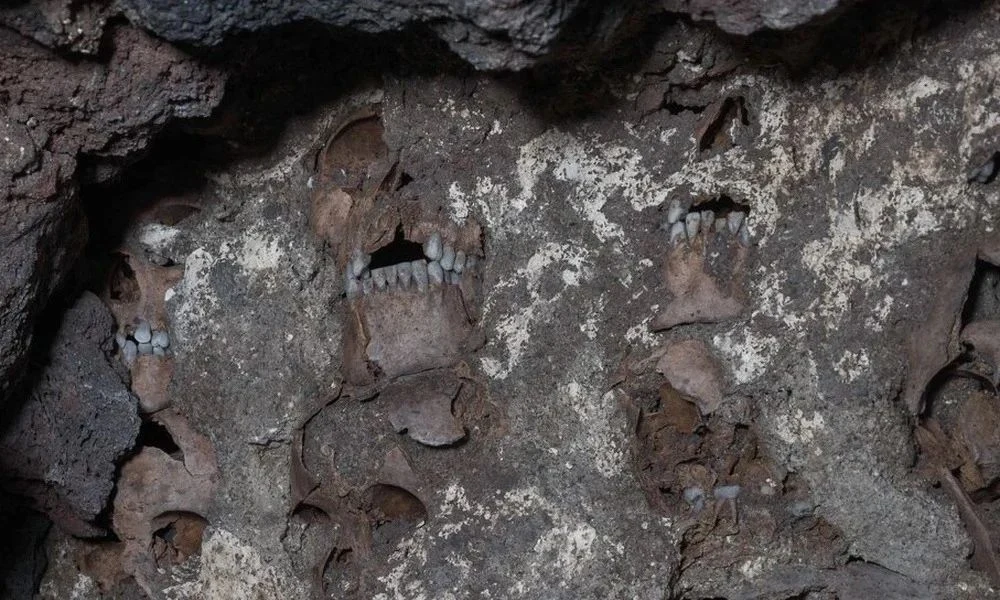
The discovery emerged during preparations to convert the property near the Zócalo into the Museum of Cacao and Chocolate. According to The New York Times, in a report republished by El Diario, architecture practice JSa anticipated ancient remains beneath the building. Project architect Aisha Ballesteros explained that its uneven tilt suggested something substantial was supporting part of the structure as the surrounding ground subsided. Archaeologists from Mexico’s National Institute of Anthropology and History, or INAH, identified the remains in 2015.
The Huei Tzompantli formed part of Tenochtitlan’s sacred precinct. Its wooden framework displayed the skulls of people sacrificed during religious ceremonies. Some skulls were subsequently incorporated into a tower using lime and mortar, creating the masonry structure preserved underground. INAH reported 655 skulls in 2023, including those of men, women and children. Published archaeological research places identified construction phases during the reign of Ahuízotl, who ruled from 1486 to 1502.
Preserving the archaeology while adapting the colonial property required an eleven-year undertaking, the newspaper reported. JSa restored the historic building and added a five-storey extension behind it, supported by piles extending 30 metres underground. Clad in locally sourced travertine, the contemporary addition remains physically separate from the colonial structure. This gap allows the older walls to remain visible and also addresses seismic requirements. The resulting complex brings together buildings and remains from three distinct periods without disguising their differences.
You Might Also Like
Known as Choco-Story Zócalo, the museum explores cacao’s cultural history and its transformation into chocolate. Its setting adds a separate account of the city’s past: an Indigenous ceremonial centre beneath a colonial house adapted for modern use. The museum has also described plans for an INAH-authorised viewing window overlooking the archaeological remains. Rather than presenting the skull tower as a recent discovery, the project demonstrates how a find made more than a decade ago continues to shape the conservation and use of Mexico City’s historic centre.