
Low Danube exposes Constantine’s Roman bridge foundations
Exceptionally low Danube water exposed parts of Constantine’s Bridge near Gigen in northern Bulgaria in summer 2026. Archaeologists from the Regional Historical Museum in Pleven used the temporary access to document foundations normally hidden beneath the river, Reuters reported on 6 August.
- Low Danube water exposed foundations of Constantine’s Bridge near Gigen in northern Bulgaria during summer 2026.
- Inaugurated in 328 CE, the crossing linked Ulpia Oescus with Sucidava in present-day Romania.
- Archaeologists used drones to record exposed remains and assess their condition before rising water concealed them again.
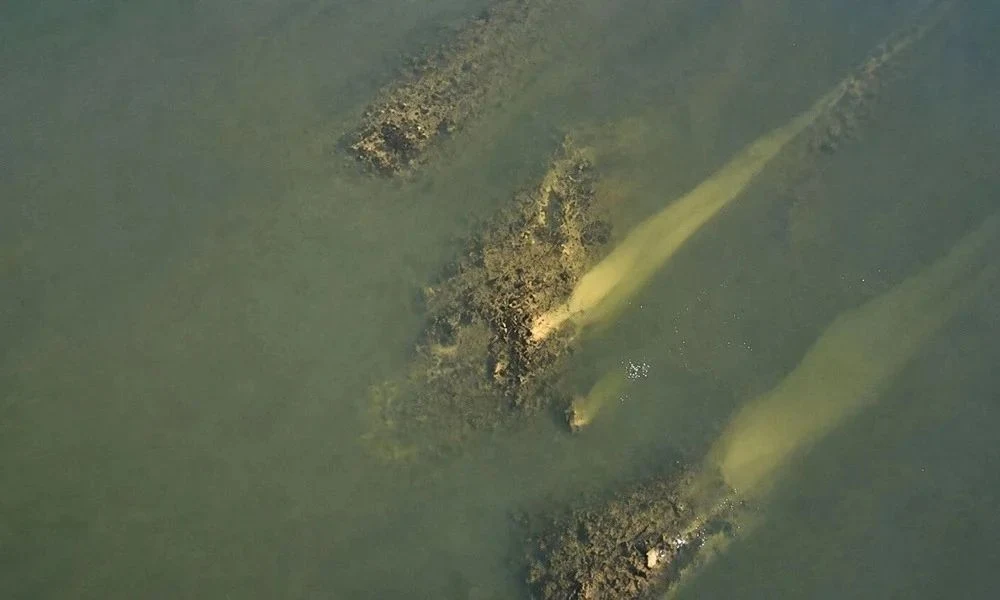
Commissioned by Emperor Constantine I and inaugurated in 328 CE, the bridge connected Ulpia Oescus on the southern bank with Sucidava to the north. Their remains lie near modern Gigen in Bulgaria and Corabia in Romania. Extending more than two kilometres, including its approaches, the crossing ranks among the longest known bridges of antiquity. Its scale reflects the ambition of a permanent connection across this stretch of the Roman frontier.
The surviving structure offered researchers an opportunity to examine that engineering directly. A museum team used drones to photograph the exposed remains, trace the visible foundations and assess their condition. Pavel Popov, an archaeologist at the Pleven museum, explained that low-water episodes allow features usually submerged to be observed in their original setting. This was an opportunity to investigate an already known monument, rather than the discovery of a previously unidentified bridge.
The survey also has implications for understanding the surrounding landscape. Researchers hope that more precise mapping will clarify the bridge’s route, identify additional structural elements and improve knowledge of its construction. According to Radio Bulgaria, the work may also illuminate changes in the Danube’s course over approximately 1,700 years. The exposed foundations therefore provide evidence both for the ancient crossing and for the river environment through which it once passed.
You Might Also Like

Despite its size, the bridge appears to have had a relatively short working life. It is generally thought to have become unusable during the fourth century, although the precise date and circumstances remain uncertain. Historical accounts of Emperor Valens’s campaign in 367 describe a crossing by a bridge of boats, contributing to the interpretation that Constantine’s structure was no longer available. The summer exposure did not resolve those questions, but it enabled further documentation before higher water could cover the remains again.